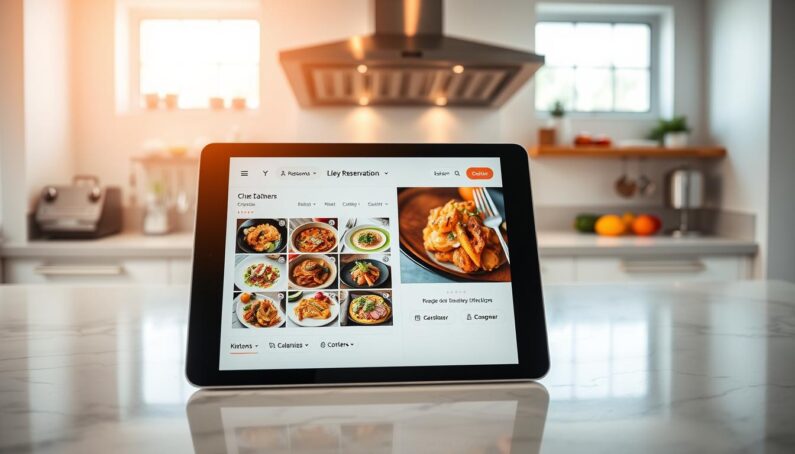
Waiting for a phone call feels old-fashioned. Today, we book rides, dinner, and groceries with a tap. Why can’t booking a personal chef be just as easy?
This change isn’t just about being convenient. It’s a big shift in how chefs meet clients. Now, people want to book online instantly. They don’t like playing phone tag or checking websites.
Chef booking platforms are like your digital storefront. They’re always open, showing you’re ready to serve. They make your life easier by handling inquiries and scheduling.
These platforms turn you from a secret to a public offer. They use digital speed to boost your client base.
They turn idle time into busy hours. Your talent is now on-demand. A good online chef booking system makes your downtime your best time.
Benefits for Personal Chefs
Using a chef gig platform is more than just finding clients. It’s about cutting down on the admin work that takes away from your creativity. This change lets you focus more on being a culinary artist, not just a chef who manages a business. The main benefits are reclaiming your time and engineering systematic growth.
Think about all the time you spend on phone tag and back-and-forth emails. A gig websites chef platform makes this work automatic. Clients can see when you’re available and book right away, often paying in advance. This isn’t just a small perk. It’s a big change that lets you use your time for more important things.
Now, let’s talk about growing your business. While you’re busy or even sleeping, the platform works for you. It shows your services to people who are looking for what you offer. This means you get more clients without having to do all the work yourself. It’s like having a sales team that never sleeps.
So, what’s the big difference? The table below shows how things change. It’s about turning your skills into something you can sell and grow.
| Operational Metric | The Old Way | The Platform Way |
|---|---|---|
| Client Inquiry & Scheduling | Manual: Phone calls, email chains, calendar cross-referencing. High chance of errors and double-booking. | Automated: Real-time booking widget. Clients book themselves, schedules sync instantly. Saves 5-10 hours a week. |
| Lead Generation & Reach | Local & network-dependent: Rely on referrals, local ads, or a personal website with limited SEO. | Expanded & targeted: Shows up in searches for “personal chef,” reaching more people looking to book. |
| Financial Efficiency | Variable: Invoicing after service, chasing payments, no deposits to secure dates. | Streamlined: Often includes secure prepayment or deposits at booking. Better cash flow and fewer no-shows. |
The main point is leverage. A gig website for chefs does more than fill your schedule. It makes your business stronger, more efficient, and more visible. You move from trading time for money to using a system to grow your reach and manage your business. That’s the modern chef’s edge.
Creating a Standout Profile
Your profile on chef booking platforms is like a mixtape. It should grab attention and make clients want to learn more. In today’s world, you’re not just another option. You’re the highlight of a special event.
A hero shot is your first impression. It should look like a Food & Wine magazine cover, not a department store photo. Your image must show professionalism and make people’s mouths water.
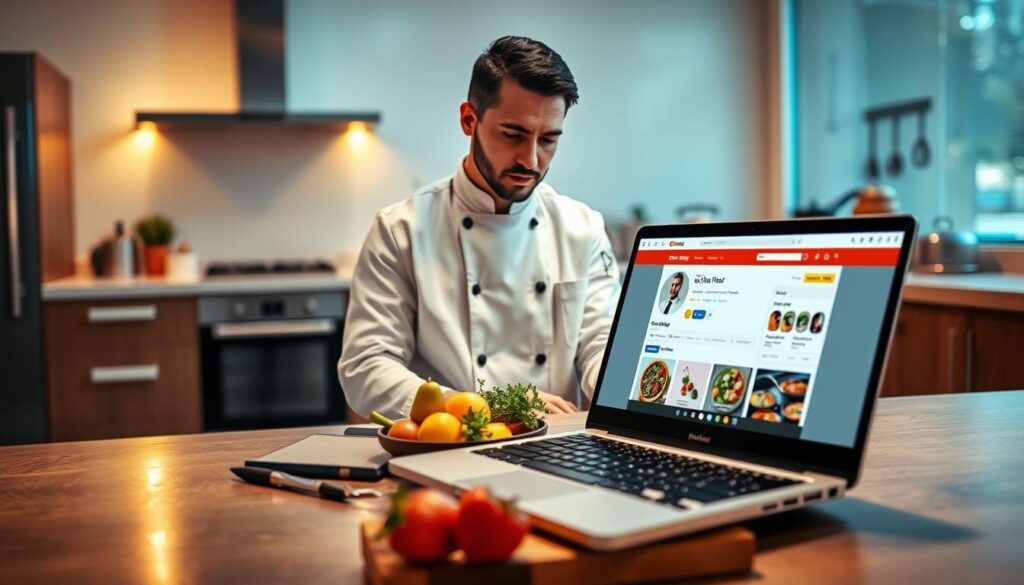
Your bio is your voice. Don’t list your certifications like a robot. Share your cooking philosophy in a fun way. Are you a rebel with a classical twist or a scientist of flavors? Let it show.
Platform tools help you shine. Use every feature to highlight your unique offerings. Tag your specialties and share a menu that tells a story. A mobile-friendly profile is essential for credibility.
Client management features are key. Client notes are more than just allergy alerts. They help you remember what clients loved. Use these notes to personalize your service. This turns one-time bookings into loyal customers.
| Profile Element | Basic Approach | Standout Strategy | Client Impact |
|---|---|---|---|
| Profile Photo | A standard headshot or kitchen selfie. | A styled hero shot in action, with professional lighting and composition. | Communicates artistry and professional worth; increases click-through rate. |
| Bio Description | A list of skills, years of experience, and generic statements. | A narrative blending culinary point-of-view, personality, and client benefit. | Builds emotional connection and establishes a unique brand identity. |
| Specialty Showcase | Broad categories like “Italian” or “Grilling.” | Hyper-specific niches (e.g., “Sicilian Street Food,” “Plant-Based BBQ”) using all platform tags. | Attracts ideal clients searching for precise experiences, reducing irrelevant inquiries. |
| Utilizing Platform Tools | Using notes only for basic allergy alerts. | Leveraging client notes and preferences to build a personalized service history. | Fosters loyalty and creates a “concierge” feeling, encouraging repeat bookings. |
| Mobile Experience | A profile that is functional but not optimized for small screens. | A fully responsive, visually cohesive profile that brands the entire interaction. | Meets clients where they are (on phones), providing a seamless, trustworthy discovery process. |
Mastering these elements on chef booking platforms is how you become more than a service provider. It’s the difference between being hired for a job and being chosen for an experience. Your profile is your chance to make a strong first impression. Make it unforgettable.
Pricing Strategies
Forget about fixed menus and rates. In the digital chef world, pricing is all about perception and incentives. On an online chef booking site, your price is more than a number. It’s a way to attract the right clients who appreciate your skills.
Think of pricing like Broadway tickets. A Saturday night show costs more than a Tuesday matinee. Your services should follow this logic too. A “Tuesday Tasting Menu” discount can turn a slow night into a money-maker.
Packages are your secret to making more money. Instead of charging per person, offer complete experiences. For example, a “Date Night Duo” or a “Feast for Ten.” These packages create value and make booking easy.
Deposits are your defense against no-shows. Requiring a 50% deposit makes clients more committed. It turns a casual inquiry into a confirmed booking.
The art of add-ons is where you make real profit. Once a booking is made, you can upsell. Offer premium wine pairings or a post-dinner cheese board for extra. These add-ons feel like a luxury, not a rip-off.
Coupons and promo codes are your tactical weapons. Use them to solve specific problems. Offer a “First Bite” discount for new clients or a “Off-Peak Perk” for slow nights. It’s not about giving away your work, but about encouraging the right behavior.
| Strategy | Psychological Principle | Platform Tool | Chef Example |
|---|---|---|---|
| Dynamic Pricing | Perceived Scarcity & Urgency | Custom Pricing for Dates | 20% off Tuesday menus |
| Experience Packages | Bundling & Value Perception | Package Creation Menu | “Anniversary Feast for Two” at $350 |
| Prepaid Deposits | Commitment & Consistency | Deposit/Prepayment Gate | 50% deposit required to book |
| Strategic Add-ons | The Decoy Effect & Upselling | Add-on Service List | +$45 for sommelier wine pairing |
| Targeted Coupons | Reward & Incentive | Promo Code Generator | “FIRST25” for new client bookings |
Mastering these strategies turns the online chef booking platform into a powerful commerce engine. You’re not just listing a price. You’re creating a choice architecture that guides clients to the best options for both of you.
The goal is clear. Use every tool—dynamic rates, packages, deposits, add-ons, and coupons—to communicate your value and shape demand. Your pricing strategy becomes your most eloquent sales pitch, all without saying a word.
Managing Bookings Professionally
Many a gig websites chef has tripped not in the kitchen, but in the clumsy dance between ‘booked’ and ‘served’. The platform gets you the gig. Your professional management turns it into a career. This is where the amateurs are separated from the pros.
Let’s be honest. A confirmation email is not a contract. It’s a promise. Your job is to build a bridge of reliability from that digital promise to an unforgettable physical experience. Fumble this handoff, and your five-star profile means nothing.

The first pillar of pro management? Communication that doesn’t feel robotic. Automated reminders are non-negotiable. But send a sterile, system-generated “Your booking is confirmed” text, and you might as well be a vending machine. The trick is personalization.
A simple “Looking forward to cooking for Sarah’s birthday on Friday! I’ll touch base Thursday with final details” does two things. It confirms the logistics and builds human anticipation. It signals you see the client, not just the calendar slot.
This leads to the second pillar: operational sanity. Double-booking is a culinary crisis waiting to happen. Seamless calendar integration is your lifeline. Sync your platform calendar with your personal one—Google, Apple, Outlook—so every booked slot is blocked in real-time. This isn’t just tech hygiene; it’s the bedrock of your credibility.
The single best tool to reduce no-shows and elevate the event? A pre-event questionnaire. Move beyond the basic “Any allergies?”
Ask questions that show you care about curation:
- “What’s the occasion? (A promotion? An anniversary?)”
- “Any favorite spices or ingredients you’d love to see featured?”
- “What’s a dish you had once that you’d love to make again?”
This transforms a transaction into a collaboration. It provides priceless intel for menu planning and makes the client feel heard before you even preheat the oven.
This entire system—personalized reminders, ironclad calendar sync, insightful questionnaires—forms a silent language. It speaks volumes about your reliability. For a client navigating the often-impersonal world of gig websites, this professional framework is a beacon of trust.
It’s what turns a nervous first-time booker into a raving regular. They didn’t just hire a chef; they hired a professional who has a system. For those looking to scale, mastering this system for managing high-volume bookings is the ultimate competitive edge.
The final plate is the payoff, but the journey from click to kitchen is where reputations are truly built. Manage that journey like a pro, and the bookings will manage themselves.
Gathering Feedback
Forget the old days of nods and compliments. Today, the real value is in public, searchable testimonials. On chef booking platforms, feedback is a key part of your digital profile.
This isn’t just about getting five stars. It’s about building a system of social proof. Think of your profile’s review section as a place where your work is discussed and celebrated.
To build trust, start with a timely follow-up. Ask for a review too soon, and you seem needy. Wait too long, and you’re forgotten. The best time is 24-48 hours after the event, when memories are fresh.
How you ask for feedback matters. A simple “please leave a review” gets a generic response. Instead, ask for specific details, like what made you smile. This gets you the kind of praise that future clients actually read.
And then there’s the tough reviews. Your response is for everyone reading your profile, not just the unhappy client. A defensive reply is a warning sign. But a gracious, solution-focused response is a trust signal that shines.
This feedback loop is your branding engine. A collection of glowing testimonials is like a Michelin star. It proves your worth to future clients.
This data is also gold for personalization. It helps you tailor your services to what clients like. It turns a one-time event into a continuous conversation. You’re not just reading reviews; you’re doing market research in real-time.
On chef booking platforms, feedback is your reputation’s compound interest. Invest in great experiences, and the reviews will pay off in future bookings. Don’t see it as a report card. Treat it as your most valuable asset.
Case Studies
Let’s look at two chefs who became stars using online chef booking. They went from hopefuls to pros. It’s all about the strategy and data.
“The Specialist” was a vegan chef in Los Angeles. She focused on unique dinner parties. Her profile was full of special tags like “plant-based” and “sustainable.”
She offered special packages, not just meals. This made her stand out. Good reviews helped her charge more.
She used the platform to test her ideas. She found that “vegan tasting menu” was a hit. This helped her attract a loyal, high-spending crowd.
“The Scalable Hustle” took a different approach. He balanced regular meals with special events. He automated his schedule to make life easier.
He used the platform to block time for prep. This helped him earn steady income. He then focused on marketing his weekend events.
He looked at his booking data to improve. He found that one-off dinners led to more regular clients. He promoted his services in booking confirmations.
So, what did these chefs do right?
The Specialist’s Playbook: Focus on a niche, offer premium services, and use reviews to your advantage. Find your culinary niche and dominate it online.
The Scalable Hustle’s Playbook: Mix regular and special services, automate, and use data for smart upsells. This creates a strong, lasting business.
Both chefs saw the platform as more than a place to list. They used it as a tool for success. Their strategies were key to their success.
Conclusion
So, what’s the final course in this digital feast? Signing up for a chef booking platform is more than just a formality. It’s a bold statement. You’re turning your kitchen into a spotlight venue.
Think of the journey we just mapped. You created a profile that tells your story better than any menu. You set prices that honor your skill and your clients’ budget. You mastered booking management like a pro.
You also learned to use feedback to sharpen your skills for the next service. This is modern culinary entrepreneurship. It’s about building a brand that’s seen, strong, and grows.
The food scene is crowded, and it needs more than just talent. It needs a smart online presence. Being on the right gig websites for chefs is your new business card.
The platform is your stage. Your strategy and execution are the show. Now, the spotlight is waiting. A full calendar is the only encore you need. Go take your bow.