Starting social media for chefs without a plan is like trying to cook without a recipe. You might make something, but it won’t be good. It will be messy and stressful.
Your online presence is a serious business channel for chefs today. It’s time to move past just posting pretty pictures. We need real strategy in the kitchen.
This is your digital mise en place. We’re setting clear goals, like “get more followers” isn’t enough. We’re checking what works and what doesn’t.
We focus on the metrics that matter. Forget about vanity stats. We want numbers that turn likes into bookings and followers into loyal clients. It’s about building a lasting growth engine, not just going viral.
Ready to stop guessing? Your first step is a solid chef Facebook marketing and social strategy. Let’s start cooking.
Choosing the Right Platforms
Data shows 84% of people have an Instagram profile. But, it’s not the only place to share your content. Posting everywhere is like serving all dishes at once—it’s confusing and overwhelming. You need a more focused approach.
First, give each platform a clear purpose. This isn’t just corporate talk; it’s your digital prep list. Is your chef Instagram for building a brand with visuals? Or is Facebook your exclusive supper club for loyal fans? Know your role before you start.
Then, figure out where your ideal client is. Instagram is great for direct connections, with 61% of users looking for purchases there. But, if everyone’s shouting in the same room, find where your audience is underserved. Maybe it’s on X (formerly Twitter) for food policy debates or LinkedIn for corporate events.
Look at the data with a personal touch. Don’t just look at numbers; find the gaps. A focused Facebook group can get better engagement than a wide broadcast. Choose wisely, not widely.
Chef Instagram is powerful because it’s a visual feast. It’s perfect for showing off your craft. It connects you directly with those who love your work, making them regulars.
But don’t forget other platforms. Ask if your content inspires, debates, or networks. Your mission statement for each platform will guide you. Focus on where your content has the most impact, and you’ll start serving the right crowd.
Content Ideas (Dishes, Behind-the-Scenes)
Forget the need for perfection. The most interesting content often comes from the chaos in the kitchen. Looking at a blank feed is like writer’s block for chefs. You’ve mastered the basics, but what do you share after the lunch rush?
The answer isn’t just perfect photos of food. You need a mix of content. Think of your feed as a tasting menu. It should have balance.
Use the culinary rule of thirds. One-third should be promotional content, like a beautifully shot dish. This is your signature special.
The next third is for sharing ideas. Talk about rare ingredients or why you use duck fat for scallops. This is edutainment—content that teaches and entertains.
The final third is for interaction. Ask about comfort foods or weird pizza toppings. This builds a community.
Why does this work? People want authenticity and relatability from brands. A staged photo is nice, but a video of you fixing a dish is human.
Your best tool is showing the kitchen’s behind-the-scenes. Share the early morning produce delivery or a failed dish that became a hit. Introduce the farmer who grows your greens.
This isn’t just content. It builds trust. It makes your kitchen relatable and human. You become the chef with a story.
Need ideas? Here’s a quick list:
- The Process Shot: A time-lapse of a braise reducing from raw to tender.
- Ingredient Deep Dive: Share the story of an heirloom tomato. Why is it special?
- Ask the Chef: “What’s one kitchen tool you can’t live without?” Let followers answer in the comments.
- Controlled Chaos: A quick, silent video of the dinner rush when three tickets come in at once.
This approach follows the 80-20 rule: 80% of your content should inform, educate, or entertain. Only 20% should be promotions. Your followers want the story, not just the menu.
For more ideas, check out these 18 content ideas for an ever-fresh social feed. It’s a great guide for this strategy.
Your social media should feel like an open kitchen door. It’s the chaos, the curiosity about food, and the real interaction that turns viewers into loyal followers.
Engaging With Followers
Think of your social media feed as a dinner party, not a drive-thru window. On platforms like chef Instagram and chef Facebook marketing, just posting isn’t enough. The real magic happens when you start talking.
Here’s the brutal math of the digital age: 78% of consumers say a brand’s social presence directly impacts their trust. For Gen Z, that number jumps to 88%. They’re not just judging your plating; they’re judging your personality. Your responsiveness is your reputation.
To move from broadcast to dialogue, ditch the robotic “Thanks!” replies. If someone says your bouillabaisse looks incredible, ask what their favorite seafood is. If they tag a friend, welcome that friend by name. This turns a comment into the start of a relationship.
Your followers didn’t sign up for a 24/7 infomercial. They signed up for inspiration, expertise, and a bit of your world. A post about the local farmers market isn’t just a pretty picture; it’s a story about ingredients. It hints at your philosophy, which builds desire for the experience you create. You’re not pitching a meal; you’re setting the table.
Now, let’s talk about criticism. Handle it with the grace of a maître d’ facing a corked wine. A defensive, deleted comment screams insecurity. A thoughtful, public response—even to a negative review—shows everyone else you’re professional and you care. This is customer service in the town square.
Your engagement strategy should feel less like a marketing checklist and more like hosting.
- Ask Questions: Poll your audience on the next special. Ask for their worst kitchen disaster stories.
- Show Up in Real Time: Use Instagram Stories or Facebook Live for a five-minute “knife sharpening tip” session. The unpolished, live format builds incredible rapport.
- Celebrate Your Community: Repost a follower’s photo of their attempt at your recipe. Thank people by name.
- Provide Value First: Answer cooking questions in the comments freely. That goodwill is a currency more valuable than any single ad.
The goal is to build a table where people want to pull up a chair and stay awhile. Every comment answered, every question addressed, every bit of praise acknowledged is another place setting. It tells people they’re seen, not just sold to. Isn’t that the secret ingredient for a loyal client base?
Mastering this on chef Instagram and through chef Facebook marketing means your social channels stop being a megaphone and start being your restaurant’s most welcoming front porch. The conversation, after all, is the main course.
Running Promotions & Contests
Creating a successful chef’s promotion is all about psychology, not just marketing. A bad giveaway is like a soggy fry—forgettable and a bit sad. But a great one is like a burst of flavor in a dish. It tells a story, not just makes a sale.
Think about it. The goal isn’t to shout “FREE STUFF!” into the void. It’s to offer an exclusive experience to your closest fans. It’s like hosting a VIP tasting online.
Start with Facebook Events. They’re not just for birthdays. For chefs, they’re a way to manage RSVPs for pop-up dinners or online cooking classes. You build excitement with teaser posts and share the event link.
The event page becomes a central spot for all the details. It turns a simple announcement into a gathering. People who say they’re going are making a commitment. You’re not just advertising; you’re filling seats.
Contests are next. The “like, share, and tag three friends” approach is old. A good contest asks for something more meaningful. For example, “Share your best photo of our signature dish” or “Tell us about your favorite family recipe.”
This way, you get real, user-generated content and deeper engagement. The winner gets a prize, and you get marketing gold and stories that make your brand relatable.
Digital coupons and “secret menu” items are also great tools. How you frame them matters. A “20% off” code feels like a discount bin. But a “Social Squad Secret Code” for following your Instagram stories feels like a special perk. It’s a limited-time offer for your loyal fans, not a broad deal for everyone.
Here’s a quick breakdown of promotion types and their strategic use:
| Promotion Type | Primary Objective | Best Platform | Key Mechanic |
|---|---|---|---|
| Facebook Event | Drive attendance & build anticipation | Create a dedicated event page; use teaser content and updates. | |
| Engagement Contest | Generate content & deepen community | Instagram, TikTok | Ask for photos, stories, or creative submissions related to your food. |
| Digital Coupon/Secret Menu | Reward loyalty & create exclusivity | Instagram Stories, Email Newsletter | Offer a time-sensitive code or item only to engaged followers. |
The key is to make promotions feel natural. Don’t make them sound like a carnival barker took over your feed. Announce a contest after posting beautiful dish photos. Reveal a secret menu item in a behind-the-scenes story about recipe testing.
Your social media for chefs strategy works best with a rhythm. Daily content is punctuated by these special moments. Done right, they create memories, build community, and give people a reason to keep coming back.
Collaborations with Influencers
Why does 90% of sponsored influencer content outperform organic posts? It’s because people trust influencers more than brands. For chefs and restaurateurs, your most powerful marketing tool might be someone else’s fork.
The old way of paying a celebrity chef for a post is like using truffle oil as perfume. It’s loud and often fake. Today, it’s all about real partnerships.
Finding the right voice is key. Look beyond big influencers. A local food blogger with 10,000 dedicated followers can do more for your restaurant than a famous chef with a million followers. Their fans are passionate, making their endorsement feel like a secret tip.
Authenticity is a must. Check if the influencer’s values match yours. If they love your food as much as you do, their content will resonate deeply.
Let’s look at influencer tiers. It’s not just about how many followers they have. It’s about finding the right fit for your brand.
| Influencer Tier | Follower Range | Typical Engagement Rate | Best For |
|---|---|---|---|
| Mega / Celebrity | 1M+ | ~1.5% | Mass brand awareness launches; often high cost, lower authenticity perception. |
| Macro | 100K – 1M | ~3.5% | Broad reach within a foodie demographic; good for regional chains. |
| Micro (The Sweet Spot) | 10K – 100K | ~6% | Targeted, high-trust campaigns for local restaurants or niche cuisine. High ROI. |
| Nano | 1K – 10K | ~8%+ | Hyper-local community building; extreme authenticity and often barter-based collaborations. |
The micro-influencer tier is your goldmine. Their audience is more engaged because they feel connected. A collaboration here is a true partnership.
To build this, offer a unique experience. Give them a kitchen tour or let them create a dish with you. They get exclusive content; you get a story that feels real.
This content should be shared across their digital platforms. A great recipe reel on chef Instagram can become a YouTube video. A thoughtful review can boost your chef Facebook marketing for weeks. You’re not just renting their feed; you’re using their endorsement in a multi-channel strategy.
Measure what matters. Look beyond likes. Track website clicks, use unique promo codes, and monitor mentions. Did their audience show up? That’s the data that makes a collaboration worth repeating.
Influencer marketing is about finding your brand’s culinary chorus. Choose authentic voices that sing your song well. Then, you won’t just be heard—you’ll be believed.
Tracking Your Social Success
In the culinary world, a dish without tasting is like a social media for chefs strategy without analytics—both are just hopeful guesses. And let’s be honest, hope isn’t a business model. If you’re not measuring your results, you’re throwing marketing spaghetti at the wall and praying something sticks. It’s time to trade that prayer for a dashboard.
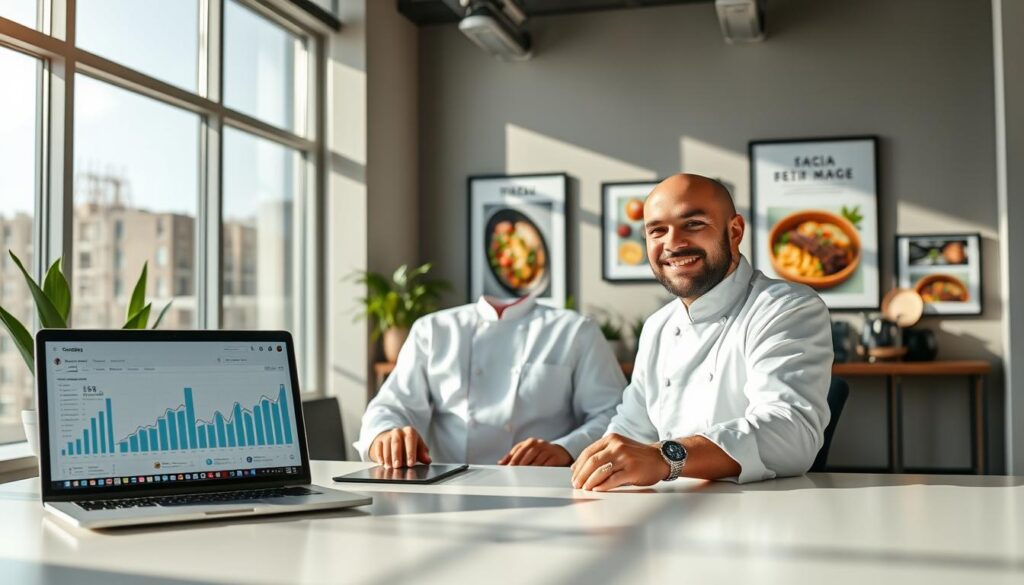
The first rule of analytics club? Know your vanity metrics from your value metrics. Likes and follows are the empty carbs of the internet. They look filling but offer zero nutritional value for your bottom line. What you crave are the protein-packed numbers: conversions and conversion rates. Did that beautiful seared scallop Reel actually lead to a booked tasting menu? That’s the question that pays.
To answer it, you need to set up proper tracking. For your chef Facebook marketing efforts, this means using UTM parameters. Think of them as little breadcrumbs you drop on every link you share. They tell you exactly which post, on which day, led a hungry scroller to your reservation page. Without them, your data is a blurry mess.
Your goals dictate your metrics. Don’t measure everything; measure what matters.
- Goal: Brand Awareness. Track Reach and Impressions. How far did your message travel?
- Goal: Driving Sales. Track Conversions and Conversion Rate. How many clicks became customers?
- Goal: Influencer Collaboration. Track Influencer ROI and Return on Ad Spend (ROAS). Did their fee translate to profitable plate sales?
Beyond the numbers, you must listen to the social chatter. Tools exist that let you eavesdrop on conversations about your brand, your cuisine, or your city’s dining scene. This is real-time, unfiltered feedback. It’s like having a thousand secret diners reporting back every night.
The final step is the analytical observation. You test a new content format. You evaluate the data. You adjust your recipe. This cycle of iteration transforms your social media for chefs from a creative outlet into a quantifiable growth engine. Stop guessing. Start measuring. Your bottom line will thank you.
Conclusion
Think of your social media plan like a signature recipe. It’s not something you write once and forget. A good strategy is always evolving, adapting to new trends and changes in your business.
Creating a great chef Instagram account is all about mixing data with creativity. You need to be both the strategist and the storyteller. This way, you make sure every follower feels valued.
Every step in your plan is connected. From picking the right platforms to measuring success, it all matters. Good content builds a community. That community helps with promotions and brings in new collaborations. And data shows you what’s working.
Share your strategy updates with your whole team. Your online presence is like your restaurant’s front door. Keep your Instagram feed exciting, your conversations friendly, and your strategy flexible.
The digital dining room is open. Your table is ready for guests.