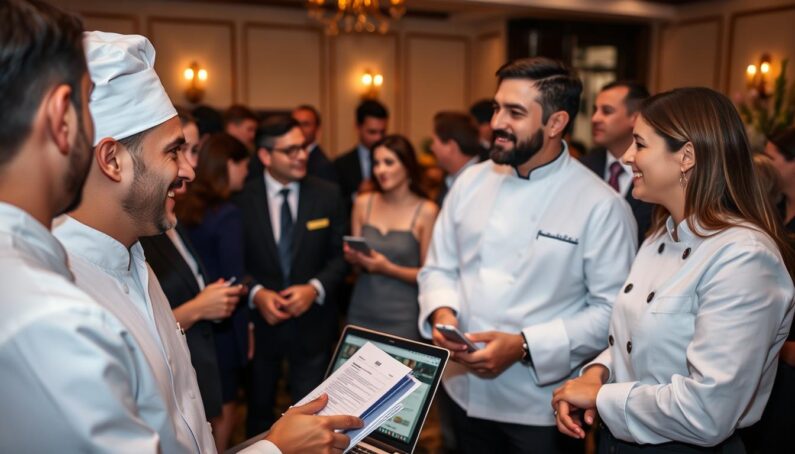
Let’s be brutally honest. The idea of a lone culinary genius is short-lived.
The story of a chef who builds an empire with one dish is a myth. In the real world of private cheffing, this story falls apart quickly.
The data is your new best friend. Unlike a restaurant with a fixed address, your business thrives on referrals. Many clients will come because someone they trust recommended you.
This isn’t just feel-good advice. It’s a hard economic fact. You’re not just a chef. You’re a key part of a network of food lovers, event planners, and collaborators.
Ignoring chef networking is like trying to cook a meal with a single butter knife. It’s possible but hard and embarrassing.
Think about Gordon Ramsay’s TV persona. His empire wasn’t built by yelling. It was through connections he made over years.
Your network isn’t a nice-to-have. It’s your most valuable mise en place. Build it wisely.
Where to Connect (Events, Online)
Finding your next big client isn’t a secret. It’s all about attending chef events and joining online groups. Think of it like growing a garden. You need both sunlight and good soil.
First, let’s talk about the real world. Food festivals are more than just food. They’re places where you can meet event planners and wealthy families looking for chefs. Farmers’ markets and cooking demos are also great places to meet people.
At these events, don’t just watch. Get involved. Talk to vendors and other chefs. It’s like speed-dating, but with more cheese.
Online, it’s different. The pandemic taught us to use online groups. Places like Chefs Without Restaurants and LinkedIn groups are like digital guilds. They help you find people who understand your job.
But online networking can be tricky. It’s easy to just watch and not participate. To stand out, add to the conversation. Share your thoughts and experiences.
Let’s look at where to spend your time. The table below is a guide for your networking efforts.
| Venue Type | Key Activity | Pro Tip | Potential Yield |
|---|---|---|---|
| Food Festivals & Culinary Events | Strategic mingling, tasting, observing trends | Volunteer to help a vendor; it grants backstage access. | High-value client leads, vendor partnerships |
| Farmers’ Markets | Ingredient sourcing & producer conversations | Ask a question that starts with “How do you…?” | Local supplier intel, peer chef connections |
| Cooking Demos & Workshops | Skill demonstration & audience engagement | Stay after to answer questions one-on-one. | Direct client bookings, teaching opportunities |
| Online Chef Communities (e.g., Chefs Without Restaurants) | Forum discussions, resource sharing, problem-solving | Post a genuine “How did you handle…” scenario. | Long-term peer support, collaborative projects |
| Professional Networking Groups (LinkedIn, Industry Associations) | Content contribution, direct messaging, group projects | Endorse a skill for someone you genuinely admire. | Referral pipelines, national industry visibility |
It’s not about choosing online or offline. It’s about balancing both. Being present in both worlds is key. Live events create memories, while online groups build credibility. Don’t miss out on either.
Joining Chef Groups & Forums
Stepping up from casual chats, real connections in the private chef world happen in guilds and forums. It’s like moving from casual drinks to a serious business meeting. The talk changes from “What’s your favorite dish?” to “How do you make money?”
Professional chef associations are key. The American Personal & Private Chef Association (APPCA) is more than a club. It’s like the chef’s version of the Jedi Council. Being a member shows you’re serious, not just a hobbyist.
Chefs say getting clients is easier with the APPCA logo on their site. It’s like a seal of approval.
Being part of these groups offers more than just a logo. You get access to valuable resources like contract templates and pricing guides. You also join a community that helps you solve problems, making your work easier.
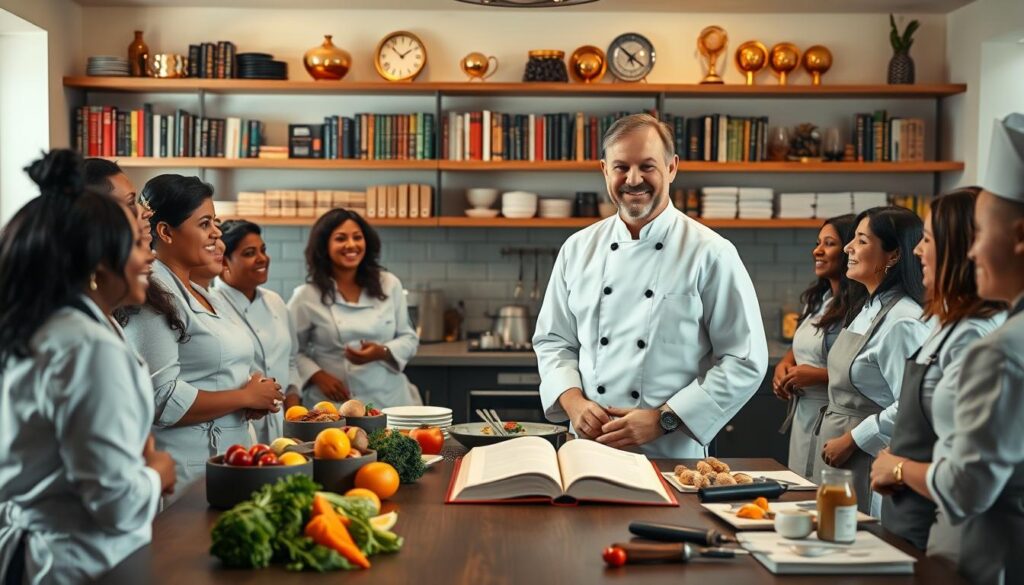
But, I found that joining groups outside the kitchen was just as valuable. Groups like Business Network International (BNI) teach you to think like a business leader. It’s about working with people from different fields, not just other chefs.
In these forums, you share experiences and find solutions. You’re not alone when dealing with tough client requests. Someone in your chef association or BNI chapter has likely faced the same issue and can help.
So, while online groups are useful for quick advice, a formal chef association is your main hub. It’s where you build strong relationships and solve problems before they become big issues.
Guest Posting & Speaking
Getting ahead in the culinary world isn’t just about having the best tools. It’s about using a microphone and writing for others. This is where chef networking shifts from just meeting people to building a reputation. It’s like moving from the kitchen to the stage.
Look at Chef Chris Spear. He didn’t just open a restaurant. He started the “Chefs Without Restaurants” podcast and created a network for chefs. He also wrote for StarChefs. His approach shows the power of sharing your voice.
So, how do you start? Start by hosting a small, exclusive dinner. Use wax-sealed invitations. You’re not just serving food; you’re telling a story. This story gets shared online, turning guests into promoters.
Writing an article or speaking at a local group does something special. It makes you the go-to person for advice. Your business card becomes a symbol of knowledge. People hire you for your unique view, not just to cook.
This isn’t just about looking good. It’s about building your reputation. Every podcast, article, and speech adds to your credibility. The reward isn’t just new contacts. It’s a room full of people who see you as an expert.
| Authority Platform | Time Investment | Network Expansion | Perceived Authority Boost |
|---|---|---|---|
| Podcast Hosting | High (Ongoing) | National/Global | Very High |
| Guest Blogging | Medium (Per Article) | Industry-Specific | High |
| Exclusive Dinners | High (Per Event) | Local/High-Value | High (Elite) |
| Conference Speaking | Medium (Prep + Event) | Regional/National | Very High |
Notice a pattern? The activities that boost your authority the most require a lot of work upfront. But they pay off big time. A great talk can lead to many new clients. A viral article can fill your calendar for months.
The strategy is simple: stop asking for the spotlight and create your own stage. For more on this, check out a solid guest posting strategy. It’s the key to turning your knowledge into influence.
Guest posting and speaking change your role. You become a leader in conversations, not just a cook. In the world of attention, that’s the most valuable thing you can offer.
Building Partnerships with Vendors
Why stick to just chefs when you can reach out to wellness centers, specialty grocers, and vacation hosts? Think outside the box. Your best connections might not be the ones you expect.
Building an ecosystem is more than just networking. Partnering with a fancy gym or a health coach gets you in front of people who value top-notch wellness. You help them improve their service, and they send you new clients. It’s a win-win situation.
Take Chef Chris Spear as an example. He figured out that vacation rental sites like Airbnb are a goldmine. These hosts want to make their guests happy. Spear offered his chef services as a special add-on.
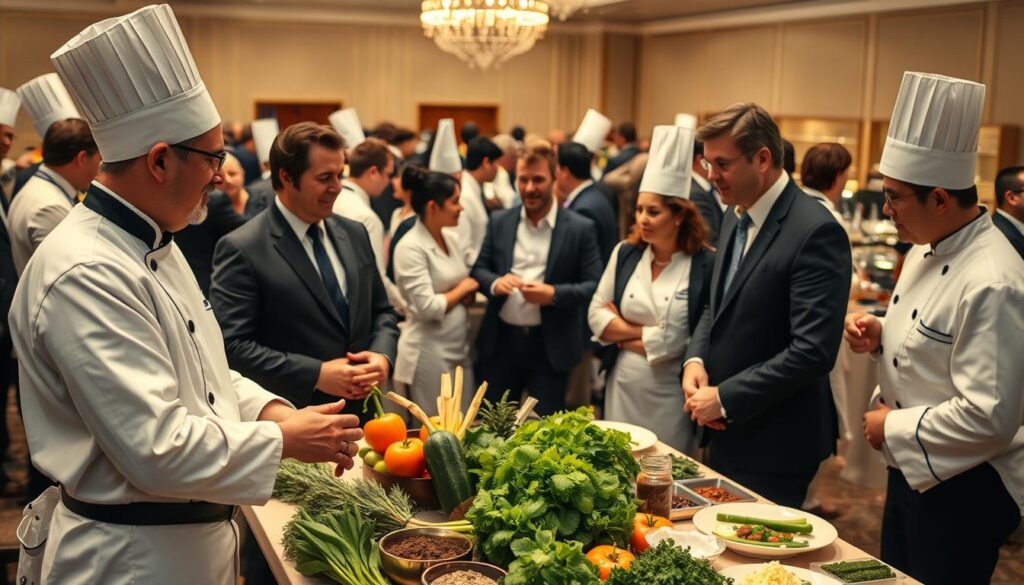
Now, about 90% of Spear’s business comes from vacation rentals. He’s in the guest’s mind before they even think about dinner. This is more than just networking; it’s business model innovation.
Your strategy is simple. Find businesses where your ideal client is already hanging out.
- Specialty Grocery Stores: Their customers love food. Offer cooking demos or meal packages.
- Corporate Event Planners: They need reliable catering for big client dinners. Be their go-to chef.
- Luxury Realtors: They host housewarming parties for new homeowners. Provide top-notch catering to impress.
Don’t just attend generic chef events. Go where your ideal client is already. This approach is like successful retail partnerships. Find a good partner, agree on value, and make the partnership work smoothly.
Do you want to find clients where they already are, or just where you’re comfortable? The best network is often the one you build sideways.
Turning Contacts Into Referrals
A LinkedIn connection isn’t a referral; it’s just a digital handshake waiting for meaning. Most chef networking efforts fail here, stuck between a friendly chat and a booked gig. Your contacts folder becomes a graveyard of good intentions.
The transformation requires a deliberate process. Think of it as a social CRM for your culinary career. You need a system, not just hope.
First, your pitch. Ditch the robotic spiel. Your introduction should be a compelling micro-story. Who are you, what unique experience do you create, and why should someone care? If it doesn’t feel authentic, it’s just noise.
Second, the follow-up. Waiting more than 48 hours is basically sending the message, “You were not memorable.” A prompt, personalized note is the difference between a contact and a conversation starter. What’s the point of a hundred contacts if none of them remember you?
Third, and this is the core mechanic, build the reciprocal network. This is where the magic happens.
When you’re booked, you send work to a trusted colleague. When they’re swamped, they return the favor. Chef Spear nailed it: “Having a stream of referrals can really help you out… it’s great to have another chef you can recommend.” This creates a resilient, decentralized job board among your peers.
It flips the script from a scarcity mentality to one of abundance. You’re not hoarding clients; you’re circulating value within your professional ecosystem. The question shifts from “what can this person do for me?” to “how can we create value for each other?”
That’s the ultimate goal of networking. It turns your collection of business cards into a living, breathing support system. Being a personal chef is much easier when you have people to lean on. Your network becomes your most reliable source of new opportunities.
Maintaining Professional Relationships
Making contacts into referrals is like culinary alchemy. It needs constant care and patience. The first meeting is just the start—the real magic happens later.
Networking is not just about one-time deals. It’s about building a lasting support system. Chefs in testimonials talk about the long-term benefits, not just quick wins.
Chef associations are more than just events. They are the foundation of ongoing connections. They help your professional network grow strong over time.
Maintenance is the hard work nobody likes to share on social media. It’s sending a congratulatory note when someone’s restaurant gets featured. It’s sharing articles and remembering to reach out when someone needs help.
In today’s world, real professional relationships are rare. We all have many LinkedIn connections, but how many are real? It’s about building genuine connections, not just collecting names.
So, how do you cultivate these relationships? It’s about small, thoughtful actions, not big gestures. Here’s a look at different ways to maintain relationships and their value.
| Maintenance Strategy | Effort Level | Frequency | Relational ROI | Best For |
|---|---|---|---|---|
| Quarterly Check-in Email | Low | Every 3 months | Medium | Broad network maintenance |
| Sharing Industry Articles | Low-Medium | 2-3 times monthly | Medium-High | Demonstrating ongoing value |
| Annual Holiday Card | Medium | Yearly | Low-Medium | Traditional relationship upkeep |
| Celebratory Note (Promotions/Openings) | Low | As occasions arise | High | Building emotional capital |
| Small Group Dinners | High | Quarterly | Very High | Deepening key relationships |
The best strategies for building relationships don’t take a lot of effort. A simple congratulatory note can make a big impact. It shows you care and are paying attention.
Chef associations make maintaining relationships easier. They provide a structure for ongoing connections. Their platforms and events offer natural opportunities to stay in touch.
Most people will forget you without regular contact. But those you nurture become your support system. They help you through tough times and provide valuable referrals.
Building a network is not enough. You need a community that supports you. This community is essential for your success in the culinary world.
Think of your professional relationships as your most valuable crop. They need regular care to grow. Water them well to ensure a strong harvest.
Conclusion
Let’s cut to the chase. Trying to advance your chef career alone is like trying to boil water with a flashlight—it’s pointless and a bit sad.
The idea is simple. To succeed, you need to network. It’s not just a side job; it’s the key to growing your business.
Think of chef associations as your headquarters. They’re where you share strategies. Industry events are your chance to test ideas and make alliances.
This is about building a professional ecosystem. You’re not just cooking; you’re growing a community that supports your work. Every connection can lead to new opportunities.
Networking is a continuous effort. It takes time and real interest. The reward is a strong career that can handle changes. This builds your career’s resilience.
Being a personal chef is a fulfilling career. The best reward is a career built on community, not just food. Stop working alone. Start building your culinary network. Your career’s next step is through connections.