
Let’s face it. In today’s world, being a great cook is just the beginning.
The real challenge is online. Your digital presence is what draws in clients. It’s the first taste they get of you.
Creating a personal chef brand online is not just about looks. It’s a smart move for a sustainable business.
It’s like moving from being a talented line cook to becoming a famous private chef. Your mix of skills, stories, and style makes your service unique.
We’re not just serving food. We’re serving a story—a unique identity that shows your values and cooking style. This is what sets you apart in today’s world.
Why Build a Personal Chef Brand?
Branding isn’t just about looking good; it’s a smart way to make your cooking skills into a business. A five-star meal is just the start. In today’s world, it’s not enough.
Your cooking talents are something people want. Your personal chef brand makes you stand out. It’s what makes someone choose you over others in Las Vegas.
A strong brand does three key things. First, it builds trust before you even meet. People like to hire those they know and understand. Your brand is like a digital handshake.
Second, it makes you different. In a world where many can cook, your brand is what sets you apart. It’s unique and can’t be copied.
Lastly, it leaves a lasting impression. You’re not just selling food; you’re selling an experience. Your brand is the story you tell.
This isn’t just talk; it’s real business. A clear culinary brand attracts the right clients. It also means you can charge more for your work. You’re selling a unique experience, not just food.
Without a brand, you’re just another caterer. But with a strong brand, you’re an artist with a waiting list. It’s not about your cooking skills; it’s about your brand building skills.
| Aspect | Chef With a Defined Brand | Chef Without a Defined Brand |
|---|---|---|
| Client Perception | Seen as a unique artist or specialist | Viewed as a generic service provider |
| Pricing Power | Commands premium rates based on value | Competes on price in a crowded market |
| Trust & Decision Speed | Trust is pre-established through brand narrative | Must build trust from zero in each interaction |
| Marketing Efficiency | Attracts ideal clients organically | Spends energy convincing uninterested leads |
| Long-Term Value | Builds equity that compounds over time | Remains transactional, reliant on constant hustle |
So, why build a personal chef brand? It’s because your next client wants more than just a meal. They want a chef whose story they can relate to. Your brand is that connection. It turns your kitchen into a place for sharing stories.
Defining Your Unique Value
To go from ‘a chef’ to ‘the chef’, you need a clear message, not just a list of dishes. Your unique value proposition (UVP) is key to your online identity. It’s not just about what you can cook. It’s about solving a specific problem for a specific client.
Let’s be real. Anyone can follow a recipe. But your real value is in how you make it special. Are you the go-to for busy Silicon Valley execs, making meals that fit their hectic lives? Or maybe you’re the master of farm-to-table dinners, where each dish tells a story?
Think deeply about your strengths. What makes you unique? Is it your technique, like sous-vide perfection? Or maybe it’s your commitment to zero-waste cooking? This is your culinary signature, the core of your online identity.
To make it real, think about this:
| Client Archetype | Their Unspoken Problem | “A Chef” Offers | “The Chef” Solves With |
|---|---|---|---|
| The Busy Professional | “I’m exhausted. I want healthy food, but thinking about it is a chore.” | Meal prep services. | A structured, 5-day “Executive Fuel” system with macro-tracking and one-pan reheating. |
| The Foodie Experience Seeker | “Dining out is boring. I want a story, not just a steak.” | Private dining. | A “Terroir Tour” menu where each dish highlights a single local farm’s story. |
| The Health-Conscious Family | “I need meals everyone will eat, but my kid has allergies and my spouse is keto-curious.” | Family-style cooking. | A “Universal Delicious” protocol that creates core dishes adaptable to 8 major dietary needs. |
Notice the difference? The right column is a targeted solution, not just a service. This clarity is your brand’s core. It answers the “why you?” before anyone asks. Defining this is strategic, not just self-reflection. It turns your skills into a signature and builds a strong online foundation.
Crafting a Visual Identity (Logo, Photos)
Your online presence is like a gallery. Your logo and photos are the key pieces that grab attention or lose it. In the fast-paced digital world, your visual identity is your first impression. It’s what makes people want to learn more.
Think about it. A beautiful, well-captured photo of food is essential. A bad photo can make you look amateur. It’s not just a bad picture; it’s a sign of a lack of professionalism.
Investing in professional photos is key to credibility. Your logo is like a badge of honor, showing your standards and pride. Your Instagram feed is like a tasting menu, giving a sneak peek of what you offer. This is where chef branding comes to life.
You don’t need to be a graphic design expert to look like one. Tools like Desygner make it easy to create professional visuals. They offer templates and easy-to-use interfaces for logos and social media posts. Your online identity should be consistent, clean, and uniquely yours.
Every image you share tells a part of your brand’s story. The way you cut vegetables shows your skill. Fresh produce highlights your ingredient focus. A well-presented dish invites people to experience your cooking. This is the art of modern chef branding.
Creating a visual identity is where strategy meets creativity. It’s about making sure every detail of your online identity matches your unique value. When done right, it attracts clients and makes them curious about your story.
Storytelling for Chefs
In a world full of food photos, your story is what sets you apart. It’s the secret ingredient most chefs forget. A truffle becomes special when you talk about the dog that found it in Italy. Your grandmother’s mole recipe comes alive when you share her kitchen stories from Oaxaca.
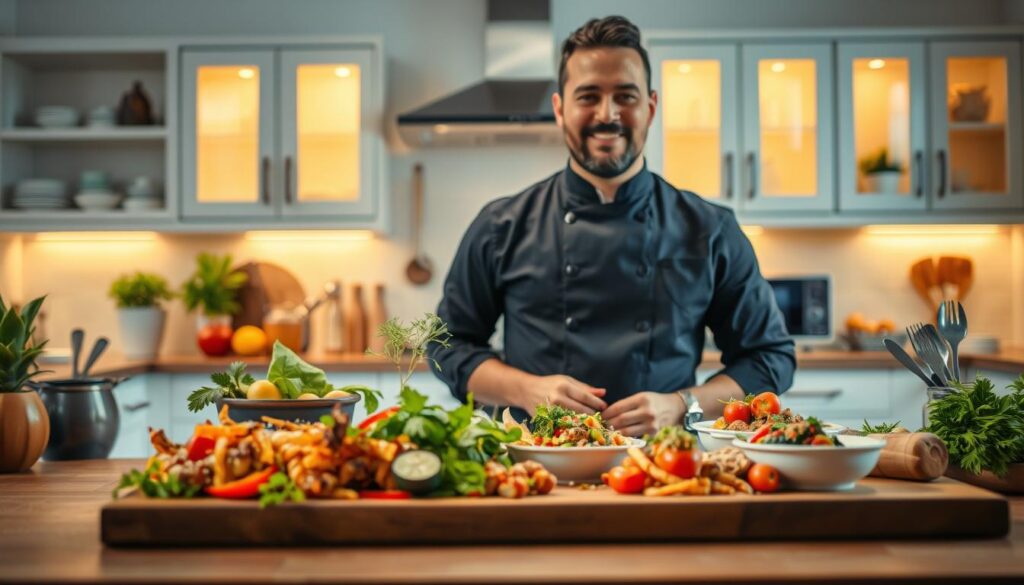
Mastering the Art of Storytelling gets it right. Every ingredient and technique has a story. These stories connect with people on a deeper level than any list can.
People connect with people, not just resumes. Your stories link your skills to a client’s desire for a memorable meal. They turn a simple meal into a shared experience. This is how you build a personal chef brand that feels personal.
| Aspect | The Transactional Chef | The Storytelling Chef |
|---|---|---|
| Focus | Price, menu items, logistics | Origin, inspiration, emotional payoff |
| Client Perception | A service provider | A creative partner with a history |
| Marketing Content | Menu PDFs, price lists | Blog posts about ingredient sourcing, cultural deep-dives |
| Long-term Value | One-time job completion | Client becomes a storyteller for your brand |
| Brand Memory | “The chef who made the steak.” | “The chef who told us about the Basque farm where the pepper was grown.” |
Share your stories everywhere. Add them to your website, social media, and client meetings. A blog is perfect for longer stories about your menus.
This approach to authentic brand storytelling is smart, not selfish. It’s what makes you stand out in a crowded market. Your unique story is what clients remember and recommend you for.
Essential Website Features
A website that looks great but doesn’t work is like a fancy kitchen with a broken stove. It’s all about looks but lacks function. Your website is your digital face, where first impressions are made fast.
A website that looks good but can’t be used is like a fancy dining room with a locked door. Clients want to book, but if they can’t, you lose them. Your website is like a restaurant open all the time, and it needs to run smoothly.
So, what are the must-haves for your website? These are not just nice extras; they’re essential for a modern business.
- The Custom Domain (ChefYourName.com): A domain like ChefJoe.wordpress.com looks amateur. A professional URL is key for building trust with clients.
- A Seamless Booking Widget: No more back-and-forth emails. A direct booking tool lets clients book you instantly. It turns interest into confirmed bookings.
- A Unified Command Center: Managing different calendars and systems is a mess. A central hub like Private Chef Manager keeps everything in one place. It’s all about efficiency.
- AI-Powered Assistants: AI tools for menu ideas or answering questions are smart business. They offer instant help, letting you focus on your craft. They add a high-tech touch to your online identity.
Don’t just see your website as a portfolio. It’s the heart of your online identity. It should work as hard as you do, turning visitors into clients. Adding these essential website features makes your digital presence as polished as your cooking.
Building Trust and Credibility
Think of your chef branding as a delicate soufflé. Without credibility, it falls apart. Trust is key when you cook for someone in their home. Your reputation is the most important ingredient.
How do you show you’re more than just a cook? Use social proof. A simple “great food” review won’t do. You need detailed, glowing testimonials that show your skill.
- Share quotes about your amazing sear on a scallop or your creative flavor pairings.
- Encourage clients to post their experiences on Instagram or Google. Then, share their posts.
- This isn’t just for show. It’s real proof. It’s like a five-star Yelp review for a small, exclusive place.

But social proof is just the start. Show your endless expertise. Anyone can make a dish look good. But a true artist shows the effort they put in.
Write a blog post about why you choose heirloom tomatoes from a specific farm. Share a video of you mastering a French omelet. This shows you’re always learning and improving. It answers the question: “Are you getting better?”
Also, network like a Michelin-starred maître d’. Your reputation grows in public, not just in private kitchens.
- Work with a local winery for a dinner pairing.
- Do a pop-up at a neighborhood coffee shop.
- Every meeting with a vendor, every public tasting, helps build your reputation.
These actions show you’re serious and part of the local food scene. Your chef branding is a promise. A promise of quality, consistency, and honesty. Keep that promise, and trust will be the final touch no one will ever send back.
Conclusion
Your personal chef brand is not something you can whip up quickly. It takes time, effort, and daily work. This is how you turn your talent into a business that stands out.
You’ve got all the key ingredients: a clear value, a strong visual identity, a compelling story, a website, and trust from others. Your online presence is like a digital store that’s always open.
Think of your chef branding as your signature dish. Every detail, from your logo to your social media posts, should be uniquely yours. This makes your brand unforgettable, attracting clients or keeping them away.
Getting good at this doesn’t just set you apart. It makes your voice heard in a crowded market. A strong brand turns interest into real clients and clicks into sales.
The guide is over. Now, the real fun starts. The market is hungry for chefs with a unique voice and style. Your kitchen is waiting for you.