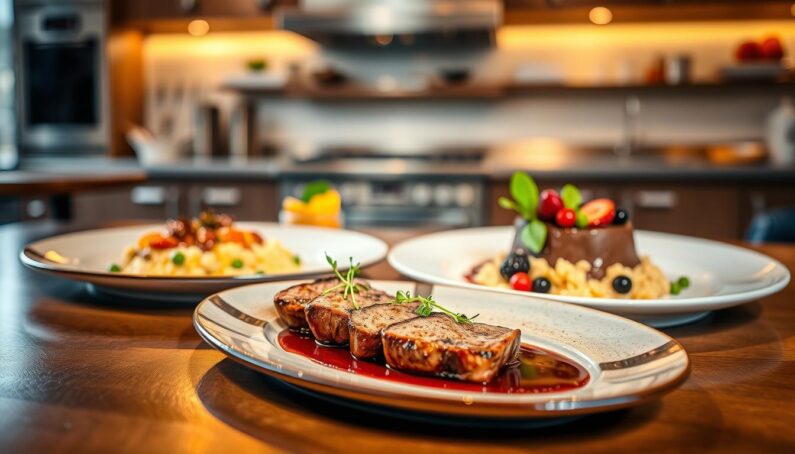
Let’s clear up the confusion. In today’s world, where everyone can be a critic and everyone has a camera, how does a chef become a brand?
The answer isn’t just a perfect hollandaise. It’s a perfect portfolio. Think of it as your culinary showreel, not just a scrapbook.
This is your visual résumé. It’s a delicious argument for why you should be the head chef, get investor funding, or be on the cover. We’re not talking about a PDF of blurry phone pics.
We’re building your edible legacy. A strong portfolio is where your art meets your analytics. It presents your professional story with the same care as a Michelin-starred dish.
This strategic collection is key to standing out. It’s the heart of any smart marketing and branding strategy. Just as you must regularly update your food photography portfolio to show growth, your culinary portfolio needs to tell a compelling, current story.
It’s your definitive answer to a very hungry market.
What Is a Chef Portfolio?
A chef portfolio is more than a document. It’s a showcase of your culinary skills. Imagine it as a mix of a director’s reel and an architect’s model. It goes beyond listing your jobs; it lets you share your unique cooking perspective.
Your resume is like a recipe card, listing your skills and jobs. But a portfolio is like a beautifully presented dish. It’s a way to show off your skills and impress.
So, what’s in this culinary showcase? It’s a mix of art and technical details. It turns “I can cook a duck” into a story of a perfectly cooked dish.
The key parts are carefully chosen. They show what you’ve done and how you think. Here’s what you need:
- The Biography & Resume: This tells your story and who you are.
- High-Quality Dish Photographs: These prove your culinary skills.
- Detailed Recipes & Sample Menus: They show your creativity and understanding of flavors.
- Professional References & Testimonials: These add credibility from others.
- Awards, Certifications & Media Features: These highlight your achievements.
- Documentation of Special Projects: This shows your creativity and initiative.
In short, a culinary portfolio is your professional showcase. It’s like showing your music instead of just talking about it. For chefs today, it’s essential, not just extra.
Selecting Standout Dishes
Creating your culinary portfolio is like making a killer album. Each dish must be a hit. It’s about marketing & branding on a personal level. You’re telling the world who you are as a chef through your dishes.
Your portfolio is like a movie trailer for your talent. It starts with a stunning amuse-bouche or crudo that grabs attention. Then, it adds emotional depth with a soulful braise that shows your understanding of flavor. And it ends with a memorable dessert that people talk about.
Be honest and pick only the best. Tuesday’s meatloaf special might not make the cut. But that seared scallop with brown butter caper sauce? That’s a winner. Ditch the sentimental clutter. Your portfolio should be a selection of your best dishes, not a list of everything you’ve cooked.
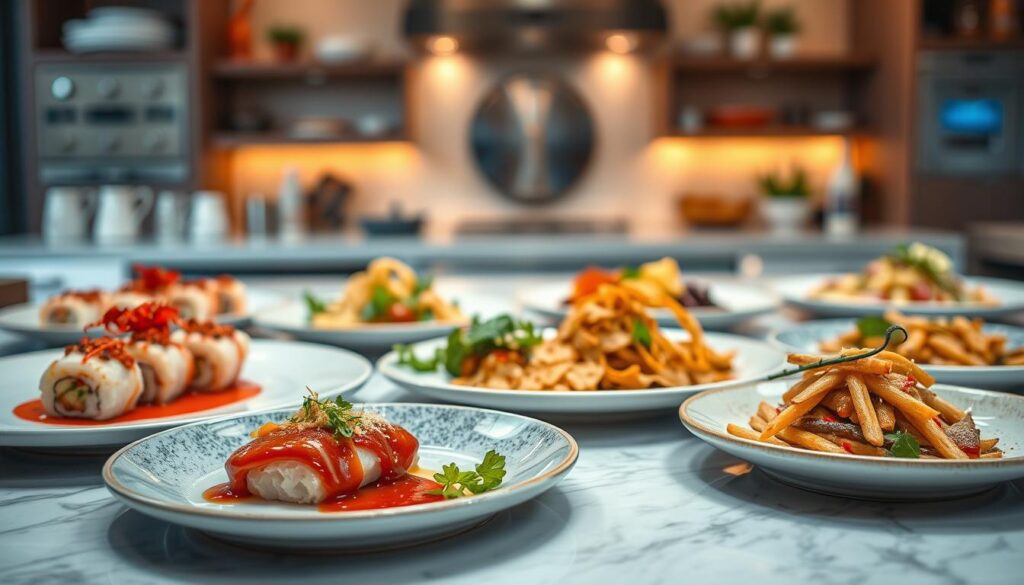
Versatility is key. A portfolio with only one style is like a one-note song. Show your range. A vegan dish shows you can work with constraints. Charcuterie showcases your foundational skills. And a deconstructed classic shows you can break the rules.
| Dish Type | Why It Works | When to Include |
|---|---|---|
| The Showstopper | Immediate visual impact. Grabs attention and showcases plating artistry. | Always. This is your hook, often a signature appetizer or dessert. |
| The Technical Masterpiece | Demonstrates core skills (butchery, sauce work, baking precision). Builds credibility. | Include 1-2 dishes that are textbook-perfect executions of classic techniques. |
| The Storyteller | Connects to real-world experience. It has a provenance from an internship or competition win. | Crucial for context. It turns a dish into a chapter of your professional journey. |
| The Range-Builder | Shows adaptability across dietary needs (vegan, gluten-free) or culinary styles. | Essential for modern kitchens. Proves you’re not a one-trick pony. |
Dishes from real-world experiences prove your skills. The dish you perfected during a Michelin-starred internship is a credential. And the winning dish from a culinary competition is a trophy. These add depth to your story that photos alone can’t.
Your selected dishes must tell a story of creativity, precision, and adaptability. This curated collection is your most powerful tool in culinary branding. It answers the question every employer is asking: “What can you do for my kitchen that no one else can?”
Professional Food Photography Tips
Forget the flash; your signature dish deserves the soft glow of a golden hour, not the harsh glare of a police lineup. Let’s cut through the noise. In a world where we eat with our eyes first, your signature dish photos are your culinary handshake. They can land you a feature or get you scrolled past in half a second. This isn’t about fancy gear—it’s about strategy.
Light is your most important ingredient. Natural, diffused light is the Parisian café of illumination. It’s flattering and honest. Harsh midday sun or the sickly green of fluorescent tubes? That’s the cafeteria special. Position your plate near a window, but avoid direct beams. Think soft shadows, not deep trenches. And for the love of all things holy, banish the on-camera flash. It flattens texture and creates highlights that look like plastic.
Composition is your silent co-conspirator. A clean, uncluttered background—a rustic slate, a dark wood table—lets your food be the hero. Pay attention to plating. Use odd numbers of items. Let a drizzle of sauce have a purposeful path. A hand reaching into the frame for a piece of bread tells a story. Overcrowding the frame is like a crowded elevator; no one looks good.
Angles are your narrative choice. Shoot the same dish from three views. The overhead “flat lay” is perfect for geometric salads or deconstructed desserts. The classic 45-degree angle feels intimate, like you’re sitting at the table. Get in close for a detail shot—the caviar on a blini, the seeds on a strawberry. This variety shows depth and skill in your portfolio.
Editing is where subtlety wins. Your goal is to make the viewer’s stomach growl, not question your filter choice. Adjust exposure to match how the dish looked in person. Boost contrast slightly to make colors pop. Dial back saturation if things look neon. A light touch is the difference between a documentary and a cartoon.
To put it all together, here’s a quick reference table contrasting common amateur mistakes with professional solutions:
| Common Pitfall | Professional Fix | Why It Works |
|---|---|---|
| Harsh overhead or flash lighting | Use soft, diffused natural light from a side window | Creates gentle shadows, reveals true texture and color, feels authentic. |
| Busy, cluttered background | Use a simple, complementary backdrop (e.g., plain wood, slate) | Directs all visual focus to the food, eliminating distraction. |
| Single, straight-on angle | Shoot a sequence: overhead, 45-degree, and a close-up detail | Shows the dish’s architecture, appeal, and craftsmanship comprehensively. |
| Over-editing with heavy filters | Subtle adjustments to exposure, contrast, and white balance only | Maintains the food’s natural, appetizing look; builds trust with the viewer. |
Mastering these elements transforms your portfolio from a simple gallery into a compelling argument for your talent. Great signature dish photos don’t just display food. They evoke a feeling, tell a story, and most importantly, make people want to taste your work. Start with the light. Get the composition right. Then shoot like you mean it.
Writing Mouthwatering Descriptions
A menu without great descriptions is like music without a conductor. It’s just a bunch of notes without feeling. Your chef menu showcase needs both beautiful pictures and exciting words to wow everyone. The photo catches your eye first, but the words make you want to come back.
So, how do you make “pan-seared salmon” sound amazing? Start by asking important questions. Where did the salmon come from? Who grew the fennel? Was the citrus picked after the first frost? These details show you care about quality and your cooking style.
Your recipe section is where you show off your skills. Listing ingredients is easy. But explaining why you use certain ingredients shows your expertise. It’s not just cooking; it’s a science.
Sample menus are your game plan. Don’t just list dishes. Tell the story behind them. Was it for a big wedding or a corporate event? The story makes your dishes special.
Think about this. One chef says, “Beef Wellington.” Another says, “Beef Wellington—centerpiece of a private dining menu celebrating a client’s 25th anniversary, featuring truffles from Oregon and a duxelles made with wild mushrooms foraged that morning.” Which one sounds better?
| Element | Bland Description | Mouthwatering Description | Why It Works |
|---|---|---|---|
| Main Protein | Grilled Chicken | Free-range chicken, brined in rosemary & lemon, grilled over applewood | Evokes taste, technique, and sourcing ethics |
| Vegetable Side | Roasted Carrots | Heirloom rainbow carrots, roasted in duck fat with local wildflower honey | Adds color story, luxury fat, and hyper-local sweetness |
| Starch Component | Mashed Potatoes | Yukon Gold potatoes, whipped with cultured butter and roasted garlic | Specifies variety, fermentation note, and flavor depth |
| Menu Context | Fall Dinner Menu | Harvest Feast Menu: designed for a vineyard’s post-grape crush celebration | Creates a complete event narrative beyond just season |
See the pattern? The right words do more than describe. They transport you. They justify the price. They turn a client’s inquiry into “Yes, chef, we want exactly that.” Your descriptions are the final, persuasive argument before the first bite is ever taken.
Remember, in a world of endless food imagery, your voice is what makes your food memorable. Is your prose as carefully crafted as your plating?
Building a Digital vs. Print Portfolio
Creating a portfolio is like learning two languages. You need to understand digital and print. It’s not just a choice. It’s a smart move for your marketing strategy. You should use both digital and print to showcase your work.
Your digital portfolio is always working for you. It’s like a 24/7 global campaign office.
- Easy Sharing & Viral Potential: Share a link and get noticed worldwide.
- Multimedia Storytelling: Add videos to tell your story in a unique way.
- Lower Cost & Easy Updates: Change your portfolio quickly without printing new copies.
- Mobile Optimization: It’s easy to view on any mobile device.
This approach is fast and effective. It’s perfect for today’s fast-paced world.
Your print portfolio is like a special edition book. It’s powerful and personal.
- Tactile Experience & Gravitas: It feels premium and shows your skill.
- Control Over Presentation: You can control every detail, ensuring it looks perfect.
- Security & Privacy: It’s safe and private, not online for everyone to see.
- Unforgettable In-Person Impact: It makes a strong impression when you share it in person.
This approach is deep and memorable. It’s all about creating a lasting impression.
So, which one is better? The answer is simple. Use both to cover all your bases.
| Aspect | Digital Portfolio | Print Portfolio |
|---|---|---|
| Primary Role | Broadcast & Recruitment | Intimate & Decisive |
| Best For | Social media, websites, email pitches | Final interviews, high-stakes client meetings |
| Key Strength | Speed, reach, and dynamic content | Tangible quality, controlled narrative, and permanence |
| Investment | Ongoing (hosting, updates) | Upfront (professional printing, binding) |
Use your digital presence to get noticed. Then, use your print portfolio to close the deal. This strategy covers all your bases. It speaks to both technology and human connection.
Your portfolio is more than just dishes. It’s a multi-platform branding effort. One platform is quick and global. The other is lasting and exclusive. Master both, and you control the story.
Sharing on Social & Website
Your digital portfolio is not just a collection of work. It’s a dynamic part of your brand online. It’s important to share it, not just keep it hidden.
Your website is like a flagship store. It should be easy to navigate and showcase your culinary skills. This is your chance to share your story without distractions.
Social media is like a mobile food truck. It creates excitement and brings people to your main site. Instagram and LinkedIn are great for chefs to share their work.
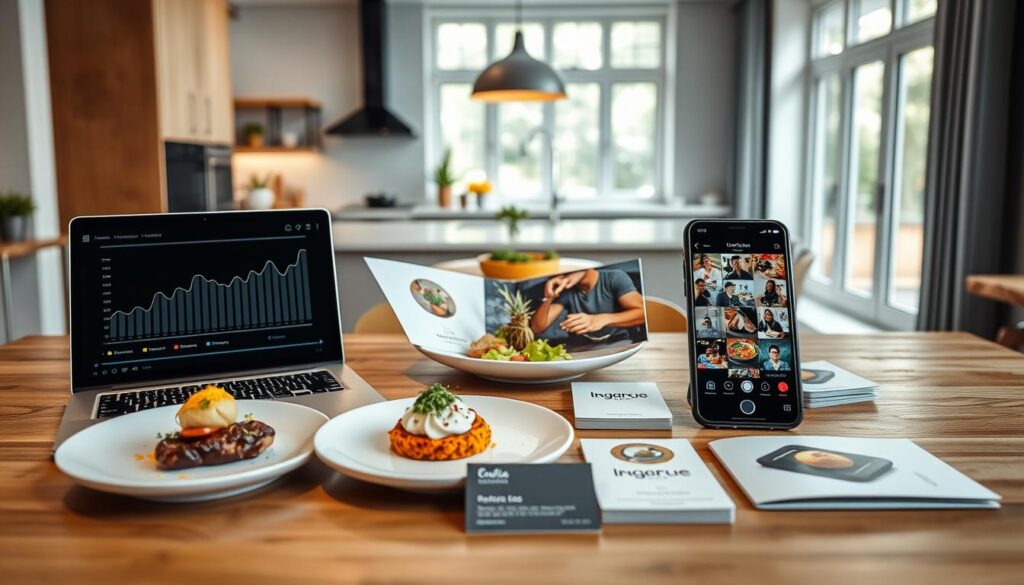
Share interesting moments like a time-lapse of plating or a close-up of a perfect crumb. These visuals grab attention and make people want to see more.
Embed your digital portfolio link everywhere. Use it in your email signature, LinkedIn bio, and Instagram profile. In today’s world, employers can check your work quickly.
Make sure your portfolio looks good on phones and tablets. A bad mobile experience can hurt your career. It shows you’re not up-to-date with technology.
Choose the right social media platforms for your brand. Each platform has its own audience and purpose. Your strategy should match.
| Platform | Primary Strength | Best For | Key Tactic |
|---|---|---|---|
| Visual Storytelling | Showcasing finished dishes, behind-the-scenes process, aesthetic | Use Stories & Reels to show dynamic plating; link to full portfolio in bio. | |
| Professional Networking | Connecting with recruiters, headhunters, and restaurant groups | Publish posts about your culinary philosophy; feature portfolio link prominently. | |
| Personal Website | Complete Narrative Control | Hosting the full portfolio, detailed project descriptions, resume | Ensure fast load times and flawless mobile responsiveness. |
It’s not just about posting food pictures. It’s about a complete marketing strategy. Each platform has its role in your branding campaign. Instagram creates desire, LinkedIn builds credibility, and your website shows the full story.
When you share your portfolio, it’s not just about sending an email. It’s about attaching a personal note to a decision-maker. This combines digital reach with a direct pitch.
Your brand presence is the sum of all these efforts. A great portfolio is useless if no one sees it. But with a good strategy, your work can launch your career. Start sharing and watch your career take off.
Conclusion
So you’ve built your chef portfolio. The photos are crisp, the descriptions sizzle, and your story is plated to perfection. This isn’t the finish line. It’s the starting gun.
Your portfolio is the core of your culinary marketing & branding. It’s the living, breathing argument for your talent. Think of it as your edible business card, constantly evolving with each new dish and accolade.
This document demands regular feeding. Update it with every seasonal menu, every mastered technique. Tailor it for each job interview or client pitch. In the competitive kitchen of modern careers, this is your sharpest tool.
Your portfolio does more than showcase skills. It builds your reputation. It is your most persuasive piece of marketing & branding, designed to open the right doors. Now go out and make them hungry for the next chapter.