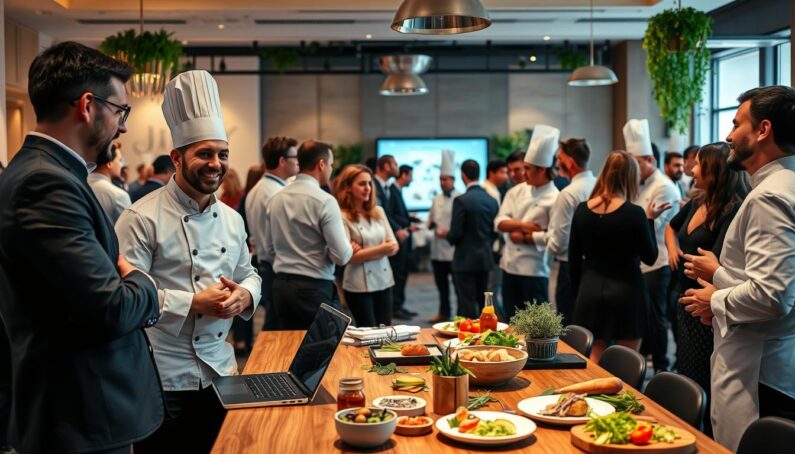
In the restaurant world, success often depends on foot traffic and a catchy storefront. But for private chefs, it’s different. There’s no anonymous Michelin inspector. Your reputation is built at book clubs or corporate lunches.
This isn’t just a different business model. It’s a different ecosystem. Your kitchen isn’t a destination. Your reputation is. Unlike a restaurant, a personal chef’s business thrives on referrals and word-of-mouth. Every happy client can become a new connection in your network.
Think of it as spreading your reputation strategically. When you’re booked on a Friday night and another call comes in, having a trusted colleague to recommend isn’t just nice. It’s essential economic strategy. It turns a missed job into a stronger relationship.
This is the first, non-negotiable shift from being a great cook to becoming a culinary entrepreneur. Your network isn’t a side project. It’s your main ingredient.
Where to Connect (Events, Online)
Forget scattering business cards like breadcrumbs. Effective chef networking is a targeted operation. You need a precise map of the connection landscape, not a vague hope that someone will stumble upon your talent.
Let’s start with the physical world. The classic advice is to haunt local food festivals and farmers’ markets. It’s sound, in theory. You’re surrounded by food-obsessed people, a captive audience for your private dining pitch.
Bring your cards. Have a 15-second intro memorized. But here’s the analytical twist: is standing in the sun for six hours, making small talk with folks more interested in free samples, the best use of your time? The ROI on traditional chef events can be surprisingly low.
That’s why I love a good contrarian play. One chef I know skipped the festival circuit entirely. Instead, she infiltrated the welcome packages of high-end Airbnb operators. Her audience was literally captive, on vacation, and in a luxurious, spending mood. That’s a targeted stage.
Online, the game changes. Your goal isn’t just to be seen—it’s to be strategically visible where conversations about private dining actually happen. This isn’t about posting your lunch plate. It’s about joining niche foodie groups, answering questions on chef forums, and commenting intelligently on posts from event planners.
The digital footprint scales. One well-placed comment can be read by hundreds of possible clients long after the local festival tents are packed away.
So, how do you choose? I call it the connection calculus. You must weigh the high-touch, personal effort of a physical event against the broader, but less intimate, reach of a clever digital strategy. Most successful chefs master a mix of both.
| Venue Type | Effort Required | Audience Quality | Scalability | ROI (Return on Investment) |
|---|---|---|---|---|
| Local Food Festivals | High (Full day, prep, travel) | Mixed (Food lovers, but not all are buyers) | Low (One-time event) | Medium |
| Farmers’ Markets | Medium (Regular attendance needed) | High (Locally-focused, quality-conscious) | Low | Medium-High |
| Airbnb/Vacation Rental Partnerships | Medium (Research & outreach) | Very High (Captive, high-spending clients) | High (Recurring referrals) | High |
| Online Food Forums & Groups | Low-Moderate (Regular engagement) | Targeted (Self-selected food enthusiasts) | Very High (Permanent digital footprint) | High over time |
| Social Media Engagement | Moderate (Content creation & interaction) | Broad (Requires careful targeting) | Very High | Variable (Depends on strategy) |
The table doesn’t lie. The highest ROI often comes from venues where your audience is pre-qualified—like those luxury vacation rentals or specific online communities. Your mission is to find your version of that captive audience.
Don’t just go where every other chef is. Go where your clients are, both physically and digitally. That’s the first rule of smart chef networking.
Joining Chef Groups & Forums
Joining a chef association is like composing a symphony. Each player has a role for a great outcome.
It’s not just about swapping business cards. It’s about getting a strategic playbook. Being part of the American Personal & Private Chef Association (APPCA) gives you more than a logo. That logo is like a secret ingredient that proves your credibility.
Think of it like a game where you work together with others. You share resources like referrals and contracts. The forums are like a library where you can learn from others’ experiences.
One chef said joining APPCA “opened many doors.” Another chef found growth through Business Network International (BNI). The key is in the structured sharing.
What do you get with your membership fee? Access to a shared brain. This brain offers:
- Vetted Referral Streams: Clients are already vetted, so you can trust them.
- Operational Wisdom: Get answers on everything from insurance to health codes.
- Pitchcraft Practice: Learn to sell your story in a friendly environment.
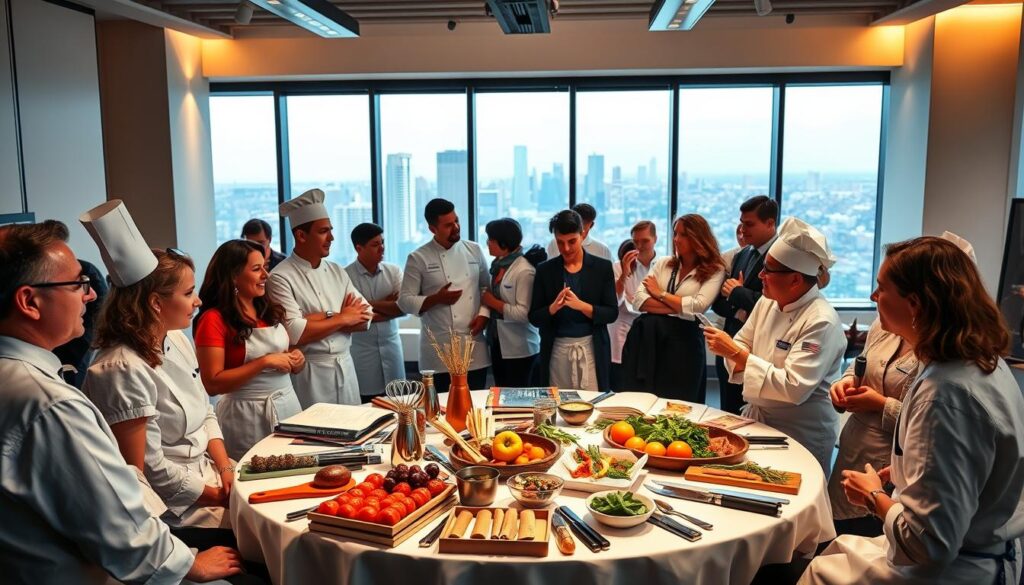
One chef had a great experience. A client asked if he was in any professional groups. He mentioned APPCA, and the client was impressed, hiring him.
This shows how important it is to be part of a group. It can make or break your chances with clients.
See your annual fee as an investment. It’s like having a team of experts working for you. You’re learning from others’ mistakes.
Switching from casual networking to joining a group is smart. It shows you’re serious about your career. Look into major chef associations and groups like BNI. For global connections, check out global culinary bodies.
Guest Posting & Speaking
Hosting a dinner is more than cooking; it’s a strategic move. It’s like a Sun Tzu parable. Guest posting is like leaving a special business card in someone’s mind. Speaking is like a live show where you’re the main attraction.
Combining both is the best strategy. You share your cooking skills for promotional space and a special guest list. It’s not just giving away a service. It’s a marketing campaign with food.
The ultimate goal is an invite-only chef event. You aim to create a sense of exclusivity and mystery. Picture a wax-sealed invitation for a local influencer or event planner. It’s not just dinner; it’s a production.
Here’s the timeline of this high-stakes chef event:
- The Pitch: Offer to host a free, stunning networking dinner at their home or venue.
- The Trade: Your culinary artistry in exchange for their social media promotion and their prized guest list.
- The Execution: A flawless, immersive dining experience that feels like insider access.
- The Amplification: Stream key moments live or have the host give a glowing outro that sparks demand for your next private chef events.
The psychology is key. A wax seal isn’t just stationery; it’s a barrier. The “invite-only” tag isn’t a limit; it’s a desire engine. You’re not selling food. You’re selling membership.
When you ask, you turn a host into a promoter. Make it clear: they should fill the room with their network and share the experience. Encourage them to post behind-the-scenes stories. The live stream is the buzz for your future events. You’re making content, connections, and prestige in one night.
This strategy is high-risk, high-reward. You leave with a room full of possible clients, a host who praises you, and social proof that boosts your brand. Your next events won’t need promotion. They’ll have a waiting list.
Building Partnerships with Vendors
Networking is more than just serving others; it’s about who supplies you and who you can supply. It’s about building alliances with key players. The truly savvy chef connects with boutique grocers, local butchers, and fitness studio owners. This is more than just shopping; it’s about building relationships.
The local organic butcher wants to showcase their products. You can be that showcase. In return, you get access to their high-end client list. It’s a mutual promotion treaty, not just a simple transaction.
This partnership goes beyond just butchers. Think about working with high-end gyms or holistic health coaches. Offer them exclusive meal plans. Partner with specialty grocery stores for in-store cooking lessons. You become a value-added service for their business.
Getting certified changes the game. A certification in sports nutrition or dietary therapy boosts your credibility. This turns a casual partnership into a strategic alliance. You’re not just a chef; you’re a certified expert they can trust.
Your goal is to turn your supply chain into a referral network. Each partnership is a chance to cross-promote. You might host a chef events dinner at a wine shop. This attracts their crowd, growing your network in quality, not just quantity.
Turning Contacts Into Referrals
Many chefs see new connections as just another checkmark. But the real magic happens when a simple handshake turns into a solid agreement. Let’s break down how to make this happen, because just hoping for the best isn’t enough.
Your pitch should be short and sweet, like a movie trailer. It’s about the experience you offer, not just your food. Highlight what makes your service unique, like your local ingredients or how you handle dinner party emergencies.
Remember, you’re not just selling food. You’re selling peace of mind, a unique experience, and a story to share. Get this right, and you’re no longer just another chef.
After meeting someone, don’t wait too long to follow up. The 48-hour rule is key. Waiting too long makes you forgettable. Acting quickly keeps the connection alive and turns you from “someone I met” to “a solution I know.”
Now, here’s the key move most chefs miss: the strategic referral out. Imagine you’re booked on a prime Friday night. A hot lead calls. Instead of worrying about lost revenue, recommend a trusted colleague.
This solves the client’s problem right away, making them grateful. It also strengthens your relationship with the other chef. You’re seen as a connected gatekeeper, not just a freelancer. This approach shows immense value without doing any actual work. The referred chef is more likely to return the favor later. Being generous is the ultimate selfish act.
| Action | The Common (Ineffective) Approach | The Strategic (Sage) Approach | Direct Outcome |
|---|---|---|---|
| The Pitch | Lists dishes, training, and prices. | Tells a 30-second story about the client’s experience and outcome. | Shifts perception from service provider to experience architect. |
| The Follow-Up | Waits a week or forgets entirely. | Contacts within 48 hours with a personalized reference. | Capitalizes on fresh memory; transitions contact to warm lead. |
| The Referral Out | Holds onto leads even when unavailable, disappointing the client. | Instantly recommends a qualified peer when booked. | Builds network capital, solves problems, and establishes gatekeeper status. |
| Long-Term Value | One-time transaction, maybe. | Reciprocal referral pipeline and enhanced reputation. | Creates a self-sustaining ecosystem of chef networking referrals. |
Stop counting business cards and start creating outcomes. Your network’s value isn’t in its size but in its energy. Master these three moves, and you’re not just a chef. You’re the heart of the network.
Maintaining Professional Relationships
The chef who only reaches out when they need a favor is building a house of cards, not a legacy. Networking’s final, most critical phase isn’t about acquisition; it’s about stewardship. You’re tending a garden of social capital, a currency that appreciates with consistent, genuine deposits and hyper-inflates with opportunism.
What does that cultivation look like? It’s the anti-algorithmic, human core of the business. It’s remembering the wedding anniversary of that stellar client from two years ago with a brief, handwritten note. It’s sending a relevant article about sustainable seafood to your fishmonger without an ask attached. It’s the quarterly coffee with your fellow chefs where you vent about food costs and share a laugh.
This isn’t soft philosophy. It’s hard strategy. Long-term relationships consistently yield the best referrals and collaborations. They’re your early-warning system for industry shifts and your support group during slow seasons. As one source perfectly framed it, being a personal chef is infinitely easier with just a few local peers who truly get it. A network of four can be a lifeline.

This is where formal structures like chef associations show their true value. They provide the fertile, structured soil for these connections to grow deep roots. An association isn’t just a directory; it’s a built-in community with shared context. Your “rolodex” (yes, I’m using the dated reference for effect) transforms from a list of names into a living, trusted asset.
So, how do you avoid being the industry’s one-hit wonder? Stop thinking in transactions. Start investing in people. Send the congratulatory text. Make the intro for someone else’s benefit. Be interested, not just interesting.
The return on this investment isn’t always immediate, but it’s compounding. While others chase the next quick lead, you’re building a resilient web of mutual respect. That’s the difference between a contact and a colleague, between a gig and a career. Your network, nurtured through authentic interest and platforms like dedicated chef associations, becomes your most durable brand equity.
Conclusion
In the private chef world, your knife skills are less important than your people skills. Networking is key, not just a side job. We’ve looked at where and how to network, from online forums to in-person deals.
Building relationships is a long-term effort, like cooking a slow-cooked sauce. Spend time on it, and you’ll see your business grow. Your success comes from both your cooking and your connections.
Being a personal chef is rewarding if you’re passionate. But passion alone doesn’t pay the bills. It’s your relationships that bring in clients and help your business grow.
Your next big client isn’t on a job board. They’re connected to you through referrals, events, or vendor recommendations. You’re part of a big, tasty network.
The culinary entrepreneur knows this. They move from solo performer to conductor of their own show. Now, go out there. Be curious, give freely, and always be ready to impress.